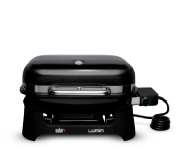
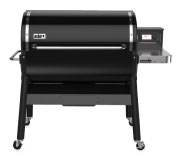
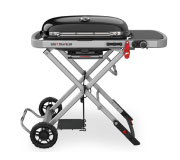
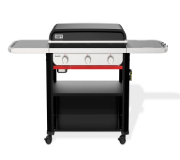
Prepare the barbecue for direct cooking over high heat (230° to 260°C).
To butterfly the prawns, remove the head. Lay the prawn on a chopping board, place your hand flat on top of the prawn to hold it in place. Using a sharp, serrated knife, horizontally cut along the back of the prawn shell. Cut through the flesh from top to tail, but leave the opposite side of the outer shell intact. Open up the prawn like a book. Using the tip of a knife, remove the vein. Repeat for each prawn.
Drizzle the olive oil over the flesh side of the prawns. Sprinkle with the garlic, lemon zest, paprika, salt, and pepper.
Barbecue the prawns over direct high heat for 2 minutes on each side.
Serve with the lemon wedges.
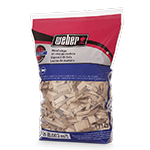
Soak hickory or mesquite wood chips in water for at least 30 minutes.
Prepare the barbecue for direct cooking over high heat (250° to 290°C).
Combine all the dressing ingredients together, including salt and pepper to taste. Cover with plastic wrap and refrigerate until required.
Truss the beef into an even cylindrical shape with kitchen string, if it has not already been done by the butcher. On a chopping board, sprinkle the salt, pepper, brown sugar, and thyme leaves over the board. Roll the beef on the chopping board, coating it all over in the seasonings.
Drain and add the wood chips to the charcoal or to the smoker box of a gas barbecue, following the manufacturer’s instructions. When smoke appears, barbecue the beef over direct high heat for 4 minutes, with the lid down, quarter turning the beef each minute or until just seared and caramelised.
Remove the beef from the barbecue. Using a very sharp chef’s knife, thinly slice the beef. Lay each slice on the chopping board, press and flatten with the side of the knife to achieve very thin slices. Place the slices of beef on a platter plate. You can serve immediately or cover with plastic wrap and refrigerate until required, up to 6 hours.
Top with the rocket and Parmesan shavings. Drizzle with the dressing and olive oil. Finish with a season of salt and pepper.
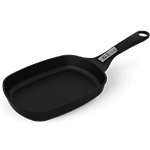
Prepare the barbecue for direct cooking over medium heat (180-230°C) and preheat a Weber large frying pan for 10 minutes.
Saute the speck over direct medium heat for 5 minutes or until crispy. Remove the speck from the frying pan onto paper towel with a slotted spoon, leaving fat behind.
Place the cooked cubes of potato, cumin and paprika into the frying pan and cook for 10 minutes or until golden and crispy, you may need to add a dash of olive oil.
Remove the potatoes from the pan and set aside. Add two tablespoons of olive oil and add the vegetables, sauté for 5 minutes. Add the potatoes and speck back to the frying pan and toss to combine.
Prepare the barbecue for indirect cooking over medium heat (180-230°C). If using a Weber Q barbecue, set up your barbecue with a convection tray and a trivet. Crack the eggs on top of the potato mixture and continue to cook over indirect medium heat for 10 to 15 minutes or until the eggs are cooked to your liking.
Remove the frying pan from the barbecue and top with the parsley (or coriander), avocado and salsa.
On a side burner or stove top bring a saucepan of water to a boil. Add the potatoes and boil until soft enough to pierce with a knife, about 20 minutes. Drain all the liquid from the saucepan.
Prepare the barbecue for indirect cooking over medium heat (190°C to 230°C). If using a Weber Q barbecue, set up your barbecue with a convection tray and a trivet.
Add the olive oil, salt, pepper, rosemary and lemon cubes to the pot with the potatoes. Vigorously shake the pot to roughen the potatoes and evenly coat with the olive oil and seasonings.
Remove the potatoes and lemon from the saucepan and place directly onto the barbecue. Roast the potatoes over indirect medium heat for 40 to 50 minutes, with the lid closed, or until golden.
If desired, finish with an extra season of salt and pepper.
Set up your Q for indirect cooking with the trivet and convection tray in place. Preheat on high for 10 minutes.
Grease the casserole dish with melted butter.
Line a bowl with sheets of paper towel and pour the corn into the centre. Pick up the paper towel and squeeze to remove the moisture from the corn.
In a large bowl combine the flour, polenta, cheese, sugar, and salt and mix thoroughly. Stir in the corn and chives and blend well. Add the buttermilk, butter, and eggs and stir through. Pour the mixture into the casserole dish and level the surface.
Once the Q is preheated, turn to the roast setting. Place the casserole dish on the trivet. Bake the corn bread until a skewer inserted into the centre comes out clean, 45 to 55 minutes.
Prepare the grill for direct cooking over medium heat (180° to 230°C) and preheat a pizza stone for at least 15 minutes, following manufacturer’s instructions.
In a frying pan on the stove top combine the garlic, onion, chilli, and olive oil; fry for 1 minute. Add the prawns and cook until their colour has changed, about 2 minutes, turning once.
Evenly spread the pizza sauce over the base and top with the prawn mixture and cheese. Season with pepper. Cook the pizza on the pizza stone over direct medium heat, with the lid closed, until the crust is golden brown and the cheese is melted, 10 to 12 minutes. Remove from the grill and dress with baby rocket leaves.
Place the apple slices in a bowl of water with the lemon juice. Set aside until needed.
In a bowl place the cinnamon and 50g each of the butter, sugar, and flour. Using your fingertips, rub the ingredients together until the mixture begins to resemble bread crumbs. Set aside until needed.
Set up your Q for indirect cooking with the trivet and convection tray in place. Preheat on high for 10 minutes.
Using an electric mixer, beat the remaining butter and sugar until pale and creamy. Add eggs, one at a time, and beat well after each addition. Using a large spoon, stir in the remaining flour and mix thoroughly.
Pour the mixture into the casserole dish and place the apples on top. Press down gently to secure them. Scatter the reserved crumb mixture evenly on top of the apples.
Once the Q is preheated, turn to the roast setting. Place the casserole dish on the trivet. Cook for 45 to 50 minutes or until a skewer comes out clean when inserted into the centre of the cake.
Dust with icing sugar and serve.
Prepare the barbecue for direct cooking over medium heat (180°C to 230°C).
Wrap each individual asparagus spear tightly with a piece of prosciutto.
Barbecue the asparagus spears over direct medium heat, with the lid closed, until the prosciutto is crispy, 3 to 4 minutes, turning once.
Serve the asparagus garnished with lemon zest.
Remove the neck and giblets from the cavity of the turkey (if desired, save to make gravy). Dry the skin of the turkey with paper towels. Fold the wings under the turkey.
Roughly chop one-half of one of the onions. Remove the leaves from four sprigs of rosemary. Put the chopped onion and rosemary leaves into a food processor along with the butter, bacon, garlic cloves, 1½ teaspoons salt, and 1 teaspoon pepper. Blitz into a paste.
Stuff the paste under the skin of the turkey’s thighs and breast. Lightly coat the turkey all over with olive oil. Season with salt and pepper.
Prepare the barbecue for indirect cooking over medium heat (190°C to 230°C). If using a Weber Family Q barbecue, set up your barbecue with a convection tray and a trivet.
Chop the remaining onion into quarters. Place the onion quarters and the two remaining sprigs of rosemary into the cavity of the turkey. Using kitchen string, tie the legs together.
To calculate the cooking time for whole turkey, allow for 20 minutes, plus an additional 20 minutes per kilo. For example, for a 5kg turkey allow 20 minutes plus 5 x 20 minutes for a total of 120 minutes.
Roast the turkey over indirect medium heat, with the lid closed, for the required cooking time or until the internal temperature has reached 71°C. The internal temperature will continue to rise 3° to 6°C while resting (final doneness temperature for turkey is 74°C).
Once the turkey has cooked, cover with aluminium foil and leave to rest for 20 to 30 minutes before carving.
The maximum sizes for the Weber Q Range: Weber Baby Q 1000: turkey roll only, Weber Baby Q1200: 3kg, Weber Q2000: 3kg, Weber Q2200: 4kg, Weber Family Q3100: 4.5kg, Weber Family Q3200: 6kg.
Make the dough by mixing the yeast, sugar and water in a jug. Set the mixture aside for 5 minutes, or until it starts to become frothy. Place the flour, semolina and salt in a large bowl, add the yeast mixture, along with the oil. Using your hands, mix together until a dough starts to form. Remove from the bowl and knead on a floured surface for 5 minutes, or until smooth. Place the dough in a floured bowl and cover with plastic wrap. Rest in a warm spot, and leave until the dough has doubled in size, approximately 60 minutes.
Prepare the barbecue for indirect cooking over medium-high heat (220°C to 260°C) with a Weber Pizza Stone. If you are using a Weber Q barbecue, set up your barbecue with a convection tray, trivet and the pizza stone. Preheat the pizza stone for 20 minutes, or as directed by your pizza stone instructions.
Once the dough has risen divide the mixture into two equal portions. Roll the dough out on a floured surface to the size of the pizza stone/tray (approx. 30cm). Drizzle a tablespoon of olive oil onto each tray. Place the bases onto the trays. Top each base with the pizza sauce, bacon, baked beans, cherry tomatoes, and cheese. Using the back of a spoon, make three indentations into the toppings of each pizza, creating a space to crack the eggs into.
Place the pizza (on tray) onto the stone and bake over indirect medium-high heat for 25 minutes. Five minutes into the cooking time, crack the eggs onto the pizza, inside the indentations. Continue to cook the pizza for a further 20 minutes, or until the base is cooked and the cheese is golden.
Remove the pizza from the barbecue wearing heatproof gloves. Repeat cooking process to cook the second pizza.
Season the pizzas with salt and pepper and garnish with fresh basil.
If you don’t have an Easy-Serve Pizza Tray you can bake the pizza straight on the pizza stone. Place a square of baking paper (slightly larger than the pizza base) onto a tray or chopping board. Dust the baking paper with a generous amount of fine semolina. Place the rolled out base on top. Add the toppings. Once ready to cook the pizza, hold the baking paper and the board/tray, while sliding the base onto the stone.
Don’t miss out! Be the first to know about the latest news and promotions.