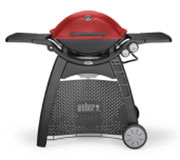
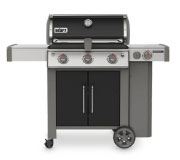
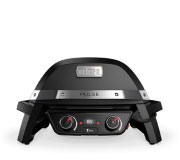
Prepare the barbecue for indirect cooking over medium heat (180° to 230°C).
With a sharp knife cut the rind around the sides of the pork, around the knuckle, and down the centre to free it on all sides, ensuring that you have cut right through the rind to the fat, but not into the flesh.
Place the pork on to the cooking grill. If the edges of the pork are hanging over the direct zone (above the fire), shield the sides with aluminium foil. Roast the pork over indirect medium heat for 2½ hours to blister the skin.
Combine all the glaze ingredients in a saucepan and place over high heat on the stove top; bring to a boil. Reduce the heat to a simmer and continue cooking until the liquid is reduced and the peaches start to break down, about 10 minutes. Take off the heat and leave to cool slightly. Blitz the glaze in a food processor until smooth.
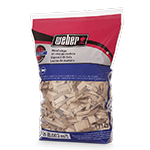
If using a gas barbecue with a smoker box, soak wood chips in water for at least 30 minutes.
Once the pork has cooked for 2½ hours and the skin is hardened and blistered, remove the skin with tongs. Score the fat in a diamond pattern, being careful not to cut into the flesh, as the ham flesh will dry out. The skin can be discarded or eaten.
Now that the skin is removed, you can add smoking woods to the barbecue to smoke the ham. If using a premium gas barbecue, set up the barbecue with a universal smoker box, following the manufacturer’s instructions. Drain and add soaked wood chips to the smoker box. If using a charcoal barbecue, add three wood chunks to the charcoal. Continue to cook the ham for a further 30 minutes to 1 hour before glazing.
After 30 minutes to 1 hour, using a basting brush, apply a generous amount of the peach glaze over the ham and continue cooking for 1 hour, glazing the ham every 20 minutes.
Once the ham is cooked and has reached an internal temperature of 68°C, remove the ham from the barbecue. The internal temperature will continue to rise 3° to 6°C while it’s resting. Leave to rest for 15 minutes before carving.
In a large bowl beat the caster sugar and butter until pale and creamy. Add the eggs, one at a time, beating after each addition. Add the sour cream and vanilla and continue to beat for a further minute until incorporated.
Prepare the barbecue for indirect cooking over medium-low heat (170°C to 190°C). If using a Weber Q barbecue, set up your barbecue with a convection tray and a trivet.
Add 1 tablespoon of the flour to a small bowl and add the drained sour cherries. Toss the bowl to coat the cherries with the flour (this will help to stop the cherries discolouring the batter). Add the remaining self-raising flour to the batter and beat over low speed until fully incorporated. Using a spatula or spoon, fold the floured sour cherries through the batter. Lightly grease the baking tin with cooking oil spray and pour the batter into the tin.
Bake the cake over indirect medium-low heat, with the lid closed, for 40 to 45 minutes, or until a skewer inserted into the centre of the cake comes out clean.
Whilst the cake is cooking, make the ganache. Place the white chocolate and thickened cream into a clean glass or ceramic bowl. Microwave on 50% power for 1 to 2 minutes, or until just melted, stirring occasionally. Set aside at room temperature until required.
Once the cake has cooked, remove the cake from the barbecue, leave to cool slightly for 5 minutes before turning out onto a cake cooling rack.
Once the cake and the ganache have completely cooled, drizzle the ganache over the cake and finish with a sprinkle of the pistachios.
If you don’t have a bundt tin, simply use a 20cm round cake tin or large Weber Ware Casserole Dish.
Prepare the barbecue for direct cooking over medium-high heat (200°C to 230°C).
After the crayfish have been put to sleep, use a large, sharp knife or cleaver to cut the crayfish in half lengthways, through its head and tail. Scoop out the yellow/brown tomalley and remove the intestinal vein. Lightly coat the flesh with olive oil and season with salt and pepper. Cut the lemon in half.
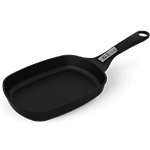
Add the chorizo and garlic to a Weber Ware Frying Pan. Place the frying pan on the cooking grill over direct medium-high heat, close the lid, and cook until the chorizo is starting to caramelise and the garlic is cooked, 4 to 5 minutes, stirring as needed. Remove the frying pan from the barbecue and stir in the butter and oregano, leaving the butter to melt.
Place the crayfish halves on the cooking grill, flesh side down, and grill over direct medium-high heat, with the lid closed, until seared, about 3 minutes. At the same time, add the lemon halves to the barbecue, cut side down, and grill until caramelised, about 3 minutes. Set aside until required. Flip the crayfish halves onto the shell side. Carefully spoon half of the chorizo butter over the crayfish, close the lid, and cook until the crayfish is just cooked through, a further 3 to 5 minutes.
Serve the crayfish immediately with extra chorizo butter and a generous squeeze of caramelised lemon juice.
In a medium bowl mix all the filling ingredients together. Prepare the chicken by placing one hand on top of the breast to keep it steady. Insert a sharp knife into the middle of the thickest section. Cut a slit roughly 5cm long. Continue to run the knife into the breast until it’s three-quarters of the way through, to create a cavity. Fill with 2 tablespoons of the filling. Thread a small bamboo skewer or toothpick through the breast to enclose the stuffing. Once the chicken is stuffed and secured, gently lift the skin. Push a piece of prosciutto under the skin. Lightly coat the chicken with oil and season with salt and pepper on all sides. Refrigerate for 1 hour.
To prepare the Pulse for roasting over medium heat (210° to 240°C), preheat the barbecue by turning the control knob(s) to high. Preheat until the barbecue reaches at least 260°C, which will take approximately 15 to 20 minutes with the lid closed. Once the barbecue is preheated, open the lid and brush the cooking grills clean. Adjust the control knob(s) to medium for roasting over medium heat.
Cook the chicken, skin side down first, with the lid closed, for 10 minutes. Turn the chicken over, close the lid, and continue to cook until the internal temperature reaches 71°C, 10 to 15 minutes more. Remove from the barbecue. Allow to rest for 5 minutes before slicing (while the chicken is resting, the internal temperature will rise 3° to 6°C to reach 74°C).
In a blender or food processor pulse the dressing ingredients and blend until smooth. Season with salt and pepper to taste. Store in the fridge until needed.
To prepare the Pulse for direct cooking over medium-high heat (240° to 260°C), preheat the barbecue by turning the control knob(s) to high. Preheat until the barbecue reaches at least 260°C, which will take approximately 15 to 20 minutes with the lid closed. Once the barbecue is preheated, open the lid and brush the cooking grills clean. Adjust the control knob(s) to one notch greater than medium for direct cooking over medium-high heat.
Lightly brush the capsicum, onion, corn, halloumi, and bread with oil. Season the capsicum, onion, and corn evenly with salt and pepper. Barbecue the onion over direct medium-high heat, with the lid closed, for 8 minutes, flipping halfway through. At the same time, barbecue the corn and capsicum for 16 minutes, rolling every 4 minutes so all sides are lightly charred. Once the vegetables are cooked, remove from the barbecue. Place the capsicum in a bowl and cover with cling film. Barbecue the halloumi and bread for a couple of minutes on each side, and remove once they have grill marks.
Once the capsicum is cool enough to handle, remove the charred skin, the core, and all the seeds. Slice the capsicum into strips. Cut the onion into quarters. Cut the kernels off the cob. Cut the halloumi and bread in half on the diagonal to create triangles.
Place the spinach and rocket in a large salad bowl. Add the capsicum, onion, corn kernels, halloumi, and bread. Add the dressing and toss to coat. Serve immediately.
Prepare the barbecue for indirect cooking over medium heat (190°C to 230°C). If using a Weber® Q® barbecue, set up your barbecue with a convection tray and a trivet.
Using a sharp knife, cut 12 small slits into the flesh of the lamb. Push a piece of garlic into each slit. Drizzle the lamb with the oil and season all over with salt and pepper.
Roast the lamb over indirect medium heat, with the lid closed, for 40 minutes. While the lamb is roasting, make the sauce.
In a medium bowl combine the boiling water, salt, and brown sugar, stirring until the salt and sugar have dissolved. Add the vinegar and the mint and stir to combine. Pour three-quarters of the mint sauce into a serving dish and set aside until the lamb is ready to serve.
Once the lamb has cooked for 40 minutes, using a basting brush, brush the lamb with the one-quarter portion of the reserved sauce. After a further 20 minutes, baste again with what remains of the one-quarter portion of sauce. Continue roasting the lamb until it is cooked to your liking, a further 20 minutes. Let the lamb rest for at least 10 minutes before carving, to allow the juices to redistribute.
To estimate the cooking time, measure the meat through its thickest part and cook for 1 minute per millimetre for medium. For example, if the roast is 90mm thick, cook for 90 minutes.
Prepare the barbecue for direct cooking over medium-high heat (200° to 260°C). Cut the cheeks from the mango. Brush the mango cheeks and peach halves with the olive oil.
Grill the chilli over direct medium-high heat, with the lid closed, until blackened and blistered, 6 to 8 minutes, turning once or twice. At the same time, grill the mango and peach halves, cut side down, until caramelised, 3 to 4 minutes. Remove from the grill as they are done.
Peel the blackened skin off the chilli, cut in half lengthwise, remove the seeds if desired, and finely chop the flesh. Using a paring knife, peel the skin off the mango cheeks and peach halves, and then finely dice.
In a medium bowl mix together the chopped chilli, diced mango, diced peaches, shallot, coriander, and lime juice. Season with salt and pepper to taste. Serve immediately; or refrigerate for up to 24 hours and bring to room temperature before serving.
Make the dough by mixing the yeast, sugar, and water in a jug. Set the mixture aside for 5 minutes, or until it starts to become frothy. Place the flour, semolina, and salt in a large bowl, add the yeast mixture and the oil. Using your hands, mix together until a dough starts to form. Remove from the bowl and knead on a floured surface for 5 minutes, or until smooth. Place the dough in a floured bowl and cover with cling wrap. Rest in a warm spot, and leave until the dough has doubled in size, approximately 1 hour.
Make the sauce by placing all the ingredients in a saucepan, and cook over a low heat for 10 minutes, stirring occasionally. Once the sauce is cooked, remove from heat and leave to cool.
Once the dough has risen divide into three equal portions. Roll the dough out on a floured surface. Place the pizza base on a piece of baking paper that has been dusted with fine semolina.
To prepare the Pulse for cooking pizza over high heat (260° to 290°C), place the Pulse grilling stone in the centre of the cooking grills. Preheat the barbecue by turning the control knob(s) to high. Preheat until the barbecue reaches at least 290°C, which will take approximately 15 to 20 minutes with the lid closed. Once the barbecue is preheated, adjust the control knob(s) to one notch lower than high.
If using a pre-made pizza base, reduce the temperature to 240° to 260°C by adjusting the control knob(s) to one notch greater than medium.
Spread the pizza sauce evenly over the bases. Arrange chosen toppings on top of the sauce. Slide one pizza off the paper directly onto the stone. Cook the pizza for 14 to 16 minutes, or until the base is crisp and the cheese is gooey. Remove from the barbecue and top with the chili and basil, if desired. Repeat with the other two pizzas.
To prepare the Pulse for direct cooking over medium-high heat (240° to 260°C), preheat the barbecue by turning the control knob(s) to high. Preheat until the barbecue reaches at least 260°C, which will take approximately 15 to 20 minutes with the lid closed.
Once the barbecue is preheated, open the lid and brush the cooking grills clean. Adjust the control knob(s) to one notch greater than medium for direct cooking over medium-high heat.
Lightly coat the onion and potato rounds with oil and season with salt and pepper, turning gently to coat all sides. Barbecue the onions and potatoes over direct medium-high heat, with the lid closed, until tender, 10 minutes, turning once. Remove from the barbecue.
Lightly brush the lamb chops with oil, and season with salt and pepper. Barbecue the lamb chops and sausages over direct medium-high heat for 8 to 12 minutes, turning once, until the lamb reaches 60°C (medium) and the sausages reach 68°C (medium well).
Marinate the chicken wings in a large bowl or large zip lock bag with all of the ingredients except the honey. Refrigerate for 2 hours or overnight.
Prepare the barbecue for indirect cooking over medium heat (180°C to 230°C). If using a Weber Q® barbecue, set up your barbecue with a convection tray and a trivet.
Remove the chicken wings from the bowl or bag and discard the marinade. Roast the wings over indirect medium heat, with the lid closed, for 25 to 30 minutes, or until cooked through. If using a Pulse barbecue, turn the chicken wings halfway through the cooking time.
Once the chicken wings have cooked through, using a basting brush, brush the honey all over the chicken wings and continue to cook for 5 minutes.
Once the wings are deep golden, remove from the barbecue and enjoy.
Don’t miss out! Be the first to know about the latest news and promotions.