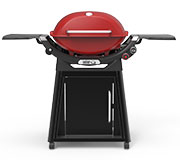
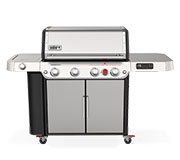
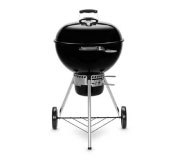
Prepare the barbecue for indirect cooking over very low heat (95°C to 130°C). If using a Weber Family Q barbecue, set up your barbecue with a convection tray and a trivet.
Trim the lamb ribs as per the Trimming and Preparing Lamb Ribs Grill Skill.
In a bowl, combine all the rub ingredients. Coat the lamb racks with the spice rub.
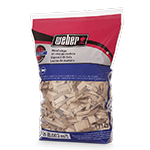
If using a charcoal barbecue, add a couple wood chunks of your choice to the fire (we used Weber Fire spice Cherry Wood Chunks). Once the barbecue has preheated (or if using a charcoal barbecue- once it also has started smoking) roast the lamb ribs over indirect very low heat for 4 to 5 hours, or until the meat feels very tender when you press on it (marshmallow texture). If desired, spritz the ribs every hour with beef stock in a spray bottle to help prevent the ribs from drying out.
In a small bowl, mix together the glaze ingredients. Using a basting brush, glaze the lamb ribs all over. Continue to roast over indirect very low heat for a further 30 minutes.
Once the ribs have cooked. Remove from the barbecue, wrap in aluminium foil and leave to rest for 30 minutes before slicing. Slice and serve.
Remove the fronds from the fennel bulb and set aside as a garnish. Cut away and discard the stalks from the fennel bulb. Cut the fennel bulb in quarters, remove the centre of the core, leaving a little amount of the core behind (this will help to keep the wedges intact). Cut ¾ of the fennel bulb into 1m thick wedges. Thinly slice the remaining ¼ of the fennel bulb and set aside until required.
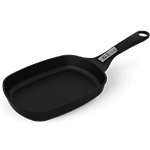
Prepare the barbecue for direct cooking over medium-high heat (200°C to 240°C) with a Weber Ware frying pan.
Using a basting brush, brush the fennel wedges with olive oil and season with salt and pepper.
Add the pecans to the frying pan and toast over direct medium-high heat, with the lid closed, for 3 minutes, or until toasted. Remove from the barbecue and set aside
Add the fennel wedges to the barbecue, grill over direct medium- high heat, with the lid closed, for 4 minutes on each side, or until softened and caramelised. Remove from the barbecue once cooked.
To make a dressing, combine the lemon juice with 2 tablespoons of olive oil and season with salt and pepper to taste.
To assemble the salad; combine the fennel wedges, thinly sliced fennel, apple slices and salad dressing. Top with the pecans and fennel bulb fronds.
In a large bowl combine the onion, garlic, oregano, salt, pepper, olive oil, paprika and chicken thigh fillets. Mix all ingredients together.
Set up your barbecue for indirect cooking over a medium- low heat (close to 180°C as possible) with a rotisserie, following the manufacturer’s instructions.
Slide one rotisserie fork onto the rod and tighten. Keeping the chicken thighs spread, carefully thread each thigh onto the rotisserie rod, piercing the fillets onto the tines. Alternate the position of each thigh to form a circular shaped roast as you layer more onto the rod. (See notes for tip 1). Once all the chicken thigh fillets are threaded on, slide the other fork onto the rod. Compact the chicken thigh fillets between the two forks (you may need to loosen the first fork), centre the roast and tighten the forks.
Place the rotisserie rod with the chicken onto the barbecue and turn on the motor. Cook for 2 hours and 30 minutes over indirect medium-low heat or until the internal temperature of the chicken has reached 74°C. (See notes for tip 2).
While the chicken is cooking, make the tzatziki. Squeeze the liquid out of the grated cucumbers, discarding the liquid. Combine the cucumber with the remaining tzatziki ingredients, adjusting seasonings to your personal taste. Cover and refrigerate until required.
Once the chicken has cooked, turn off the rotisserie and remove the rod (with tines and chicken still in place) from the barbecue with heatproof gloves and leave to rest for 15 minutes. Serve the chicken with toasted flatbreads, vegetables, lemon wedges and tzatziki.
Beat the butter, vanilla essence and sugars in a large bowl with an electric mixer until light and fluffy. Add the egg and pinch of salt, beat until well combined. With a spoon, mix in the flour, choc chips and ¾ of the candy canes (reserving some candy canes to decorate the top of the cookies).
Prepare the barbecue for indirect cooking over medium-low heat (170°C to 190°C). If using a Weber Q barbecue, set up your barbecue with a convection tray and trivet.
Spoon heaped teaspoons of mixture onto lined baking trays. Decorate the top of the cookies with the reserved crushed candy canes
Bake the cookies over indirect medium-low heat for approximately 12 minutes, or until lightly golden.
Transfer to a wire rack to cool. Store up to one week in an airtight container.
Set up your barbecue for indirect cooking over very low heat (100°C to 130°C) with your desired smoking wood chunks.
Ensure the beef cheeks are trimmed of any silver skin. In a small bowl combine the salt and pepper. Sprinkle the salt and pepper all over the beef cheeks. Also add 200mL of beef stock to a spray bottle.
Once the barbecue has preheated, and is smoking, add your beef cheeks to the barbecue. Cook over indirect very low heat for 3.5 to 4 hours, or until a dark crust (aka bark) has formed, spritzing the beef cheeks with beef stock (in the spray bottle) every hour (see tip 1).
Place the beef cheeks into a disposable drip pan and pour in the remaining 300mL of beef stock. Cover the pan tightly with several sheets of aluminium foil. Place the pan back onto the barbecue and continue to cook for a further 1.5 to 2 hours or until the beef cheeks are soft and have no resistance when a skewer/probe is inserted (approx. internal temperature of 98°C).
Once the beef cheeks are done, remove the pan from the barbecue and leave to rest for 30 minutes. Slice the beef cheeks (or pull if they fall apart) and serve.
Prepare the pork loin roast (see tips for additional information). Score the skin and truss the roast if the butcher hasn’t already done so.
Ensure your barbecue is clean and free from any grease or debris. Prepare your barbecue for indirect cooking over high heat (230°C -260°C). If you are using a Weber® Q barbecue, set up your barbecue with a convection tray and a trivet.
Lightly coat the pork loin with olive oil and season with salt all over, rubbing the salt into the score marks. To estimate the cooking time, measure the height of the pork roast through its thickest part and cook for 1 minute per millimetre for a medium doneness. For example, if the roast is 90mm thick, cook for 90 minutes.
Roast the pork over indirect high heat, with the lid closed, for 20 to 30 minutes to crackle the skin; avoid lifting the lid during this time.
Adjust the barbecue temperature to indirect medium heat (190° to 230°C), the roast setting, and continue to cook over indirect medium heat for the remaining cooking time, or until the internal temperature reaches 60°C for a medium result. The internal temperature will continue to rise 3°C to 6°C while resting (final doneness temperature for Pork is 63°C for medium, 68°C for medium well).
Once the pork has cooked, leave to rest for 15 minutes before carving. Remove the butcher’s twine, carve and serve with the apple sauce.
1. Tips for Buying: It is best to buy a piece of skin-on pork loin with the belly attached from the butcher. Avoid buying vacuum sealed pork, which has been packed in plastic, as it is much harder to crackle.
2. Scoring a pre-rolled (trussed) roast: If the butcher hasn’t already scored the skin; Score the skin at 1cm intervals around the roast, being careful not to cut the twine.
3. Scoring a piece of pork loin and belly (not yet rolled/trussed): If the butcher hasn’t already scored the skin; score the skin at 1cm intervals along the length of the roast. If needed, remove a section of the rind from above the loin meat. This is done because if you roll the belly around the loin and there is rind wrapped up inside the roast, this will be rubbery when you serve it.
4. Trussing: tightly roll the roast, and truss with butcher’s twine.
5. If the pork has cooked but the rind hasn’t crackled, remove the rind and return the rind to the barbecue and roast over indirect medium heat (190°C to 230°C) for 15 minutes to crackle whilst the pork roast is resting.
Add the apples and apple cider to a saucepan or Weber small casserole dish. Bring to a simmer over high heat for 5 minutes. Reduce heat to medium and continue to cook for 10 to 15 minutes, or until the apples have softened, stirring every couple of minutes. Serve warm or cold.
In a frying pan melt the butter over medium heat. Add the onion and garlic, cook for 3 minutes or until the onion turns translucent. Add the flour and cook for 2 minutes, stirring as needed. Add the tomato paste, Porter, beef stock and Worcestershire sauce. Simmer for 10 to 15 minutes, or until mixture thickens. If you are using leftover roast beef rather than heavily seasoned beef cheeks, you may want to season the gravy with salt and pepper, to taste. Remove from the heat and allow to cool completely.
Prepare the barbecue for indirect cooking over medium heat (190°C to 230°C). If using a Weber Q® barbecue, set up your barbecue with a convection tray and a trivet.
Line the pie tins with the shortcrust pastry, allowing the sides to overhang (see tip 1). Place the beef cheek or cubed roast beef into the centre (trimming the beef cheek to size if needed). Level fill the pie cases with the cooled gravy (don’t overfill). Brush the edge of the pastry with the beaten egg. Place a 12cm by 12cm square of the puff pastry on top of each of the pies and press around the edges of the pastry together to seal. Trim the excess pastry to approximately 1cm of overhang. Crimp fold the edges as desired, or use a fork to indent, creating a decorative border.
Pierce the tops of the pies a couple times with a knife to allow steam to escape while cooking. Brush the tops of the pastry with the lightly beaten egg.
Cook the pies over indirect medium heat for 35 to 45 minutes or until the pastry is deep golden. Leave the pies to rest for 5 minutes before serving. Serve with tomato sauce if desired.
1. To save on food waste, cut the pastry squares for pies 1 and 2 to one corner of the sheet and use the leftover strips of pastry to create the remaining pie tins, pressing edges of the strips of pastry together to create another sheet for bases 3 and 4.
Using a blender, blend all the marinade ingredients together to form a paste. Pour the marinade into a glass bowl (see note 1). Add beef to the marinade, toss to coat. Cover and refrigerate for 2 to 4 hours.
If using bamboo skewers, soak in water for 30 minutes.
To prepare the satay sauce: For quick work, blend together the peanut oil, onion, lemongrass, garlic and chilli. Alternatively, finely chop the onion, lemongrass, garlic and chilli. Add the paste (or chopped ingredients along with the peanut oil) to a frying pan over medium heat and sauté for 5 minutes, or until the onion has cooked and the mixture has become fragrant. Add the curry powder, turmeric, paprika and crushed peanuts, continue to cook for 3 minutes to toast the peanuts and spices. Add the coconut milk, water, sugar, salt and tamarind puree, simmer for 15 to 20 minutes until thickened, stirring as needed. Remove from the heat and set aside.
Prepare the barbecue for direct cooking over high heat (230-290°C). Thread the beef onto the skewers. Threading the longer strips of beef onto the skewer a few times so the skewer is compact. Try to keep the skewer to an even 1.5cm thickness.
Grill the skewers over direct high heat for 2 to 3 minutes, keeping the lid of the barbecue closed. Flip the skewers and continue to cook for 2 to 3 minutes, or until cooked to your liking.
Serve the skewers with cucumber, rice, herbs and the peanut satay sauce.
1. As the marinade has dried turmeric that can stain porous surfaces easily, it is best to use a bowl (like glass) that will not stain.
2. This recipe is terrific with the addition of smoking chips to the barbecue (we used hickory). Soak the chips in water for 30 minutes. Drain and add the wood chips to the charcoal or to the smoker box of a gas barbecue, following the manufacturer’s instructions (if using smoking wood). Once smoke appears, grill the skewers as directed.
Set up your barbecue for indirect cooking over medium heat (190 to 230°C). If using a Weber Q® barbecue, set up your barbecue with a convection tray and roasting trivet.
While the barbecue is preheating, prepare the chicken. Combine all the seasoning ingredients together. Remove any excess fat from around the cavity. Tuck the wingtips behind the chickens back. Tie the legs and tailbone together with kitchen string. Lightly coat the chicken with approximately 2 teaspoons of the olive oil and season with the spice mix.
Roast the chicken over indirect medium heat for 1 hour and 20 minutes, or until cooked through (see tips).
To prepare the baby potatoes and corn; cut any large baby potatoes in half if needed to make the potatoes all approximately the same size. Lightly coat the potatoes with 2 teaspoons of olive oil and season with 2 teaspoons of salt and 1 teaspoon of pepper. Lightly coat the corn cobs with the remaining 2 teaspoons of olive oil, 1 teaspoon of salt and ½ teaspoon of pepper.
When there is 45 minutes left of the chicken cooking time, add the potatoes to the cooking grill in the indirect cooking zone, roast over indirect medium heat for 45 minutes.
When there is 12 minutes left of the cooking time, grill the corn over direct medium heat for 12 minutes, turning every 3 to 4 minutes. When there is 4 minutes left, grill the lemon halves, cut side down over direct medium heat, for 4 minutes to caramelise. Remove all ingredients off the barbecue once cooked. Leave the chicken to rest for at least 10 to 15 minutes.
Carve the chicken and serve with the roasted potatoes, corn and drizzle the chicken with the caramelised lemon.
For best results, use a meat thermometer to know when your chicken is ready. Insert the probe deep into the breast, but not touching the cavity. You can remove the chicken from the barbecue once is reaches 71C and leave to rest for 10 to 15 minutes before carving, the temperature will continue to rise 3 to 6 degrees to the final safe cooking temperature of 74°C for poultry.
Don’t miss out! Be the first to know about the latest news and promotions.