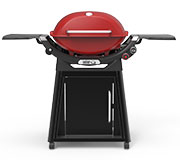
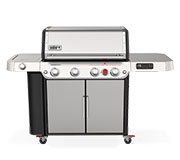
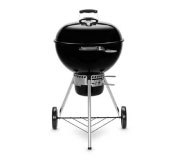
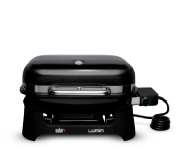
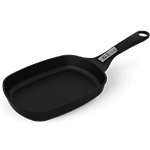
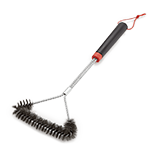
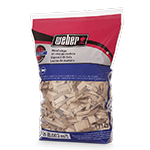
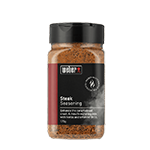
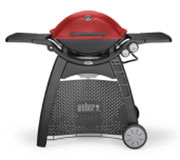
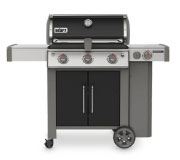
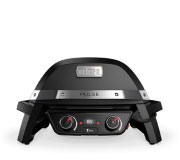
Preheat your barbecue for indirect cooking over medium heat (190-230°C). If using a Weber Q, set up your barbecue for indirect cooking with a convection tray and a trivet.
In a small bowl, combine the curry paste and olive oil. Rub the mixture all over the chicken.
Roast the chicken for approximately 1 hour and 20 minutes over indirect medium heat, or until the internal temperature deep in the breast has reached at least 71°C, the internal temperature will continue to rise 3°C while it’s resting. Grill the lemon, cut side down over direct medium heat for 2 minutes, or until caramelised.
Leave the chicken to rest for 10 minutes before carving to allow the temperature to reach 74°C and for the juices to redistribute, resulting in a juicer chicken. Squeeze the lemon all over the chicken, carve and serve.
We picked up a Marion’s Kitchen Thai Yellow Curry kit. Instead of a making a traditional curry we used the ingredients to create a complete family barbecue meal. We used the curry paste to flavour the chicken, the coconut cream and dried herbs to make a coconut rice and stirred the bamboo shoots through the rice before serving.
Prepare your barbecue for direct cooking over medium-high heat (210°C to 240°C) with a Weber Ware Frying Pan (optional) and a Weber Q® Grill Pan (optional).
Lightly coat your salmon fillets with olive oil and season with salt. Prepare your vegetables as desired, it is best to cut greens like snow peas, zucchini and broccoli into bite-sized pieces. Broccolini and asparagus can be left whole.
Once the barbecue has preheated, add your vegetables to the barbecue, adding any smaller pieces to the grill pan, any larger pieces that won’t fall through the grills can be added directly to the cooking grill. Grill the vegetables over direct medium-high heat, turning as needed and taking off the barbecue once cooked to your liking. While the vegetables are cooking, add the salmon fillets to the pan, skin side down and cook for 4 minutes, over direct medium-high heat, or until the skin is golden and crispy.
While the salmon is cooking, make the laksa butter. In a small bowl combine the butter, laksa paste and lime zest.
Flip the salmon fillets over and cook for a further 3 minutes, or until the salmon is cooked to your liking. Serve the salmon with the rice, grilled greens, a dollop of laksa butter and finish with a squeeze of fresh lime.
Your salmon can be cooked straight on the cooking grill, on a hotplate or in a Weber Ware frying pan. Use a Weber Grill Basket for any small vegetables that may fall through the cooking grill.
Prepare your barbecue for indirect cooking over medium-high heat (200°C to 260°C) with a Weber Pizza Stone (or if using a Pulse, use a Grilling Stone). If you are using a Weber Q® barbecue, set up your barbecue with a convection tray, trivet and the pizza stone on top. Preheat your pizza stone for 20 minutes.
Using a 10cm round cookie cutter (or an upturned 10cm diameter bowl and small knife), cut smaller circles out of the pizza bases. Top with pizza sauce. Decorate with your choice of pizza topping and cheese. If you have a Pizza Serving Tray, place the pizzas onto the tray.
Once the barbecue and stone has preheated, place the pizzas (on serving tray if using) onto the pizza stone. Bake over indirect medium-high heat for 15 minutes, or until the cheese is golden. Once the cheese has cooked, remove the pizzas from the barbecue and finish with any desired herbs or rocket.
Soak Hickory wood chips in water for at least 30 minutes.
Drain and add the wood chips to the charcoal or to the smoker box of a gas barbecue, following the manufacturer’s instructions. Prepare the barbecue for indirect cooking over medium heat (190°C to 230°C). When smoke appears, add the sausages to the barbecue and roast over indirect medium heat for 30 minutes, turning the sausages halfway through the cooking time, for even colouring.
Once cooked, remove the sausages from the barbecue and serve.
Set up your barbecue for direct cooking. Place a casserole dish (without lid) at the centre of the grill and add 2 tablespoons oil. Preheat on high for 10 minutes.
Lightly oil the steak and season with salt and pepper.
Once your barbecue is preheated, leave the heat setting on high. Add the onion, garlic, prosciutto, and mushrooms to the casserole dish and cook for 5 to 6 minutes, stirring occasionally. At the same time, add the beef to the grill around the casserole dish. Cook for 3 to 4 minutes per side, 6 to 8 minutes in total. When the onion mixture is cooked, add the flour and stir through, then add the beef from the grill.
Remove the casserole dish from your barbecue wearing heatproof/oven gloves.
Turn your barbecue to the roast setting (add a convection tray and trivet if using a Q) using tongs and/or heatproof gloves. Add the stock and wine to the casserole, stir through, then add the thyme and bay leaves. Place the lid on the casserole dish and place on the barbecue. Cook for 2 hours.
In a bowl rub the butter into the self-raising flour. Stir in the Parmesan and milk. Combine well. Roll into 25 to 30 small balls and place on top of the casserole. Leave the lid off the casserole dish and cook until the dumplings are golden and cooked through, 20 to 25 minutes.
Ensure your barbecue is clean and free from any grease or debris. Prepare the barbecue for indirect cooking over very low heat (110°C-130°C).
Dry the skin of the pork and score the skin if the butcher hasn’t done so already. Score through the rind and just into the fat, about 3mm deep and at 1cm intervals. Rub a little olive oil all over the pork. Season and rub salt all over, especially giving the rind a good coating of salt.
Roast the pork belly over indirect very low heat, with the lid closed, for 4 hours allowing the meat to become tender, or until the internal temperature of the pork reaches around 80°C to 85°C.
While the pork belly is cooking, make the Apple Cider Reduction. In a saucepan on a stove top or on a side burner of a barbecue, boil the apple cider, apple cider vinegar and brown sugar together for 45 minutes, or until it has reduced to a syrup, stirring as needed. Best served warm.
Once the pork belly has cooked for 4 hours or has reached 80°C to 85°C, remove it from the barbecue and set it inside while you increase the temperature of the barbecue. Increase the temperature of the barbecue for indirect cooking over high heat (240°C-260°C).
Return the pork belly to the barbecue and roast it over indirect high heat, keeping the lid of the barbecue closed as much as possible, for 20 to 30 minutes, until the skin has crackled. Remove the pork from the barbecue and leave to rest for 15 minutes before slicing.
Slice the pork belly and serve with the Apple Cider Reduction.
Leftover Idea: Add soy sauce to the Apple Cider Reduction, to make a salty, sweet braising liquid. Add the leftover pork to a small disposable foil drip pan, crackle side up. Fill the dish with the liquid, ideally the meat will be submerged, but the crackle will be exposed. Reheat in an oven or barbecue set up for indirect heat at 200°C for 30 minutes to warm through and harden the crackle. Serve with steamed rice and grilled greens.
Into a large bowl, add the flour, salt, sugar and yeast. Give this a quick stir and then add the warm water and melted butter; stir to fully combine. Once the dough has come together, turn out onto a clean surface and knead for 10 minutes.
After 10 minutes of kneading, return the dough to a clean bowl, cover with plastic wrap and leave to rise in a warm spot for an hour or until the dough has doubled in size.
Grease and line an approximate 11cm x 30cm loaf tin with baking paper. Once the dough has doubled in size, turn out onto a clean surface and again knead for a couple of minutes. Shape the dough into an approximate size of your loaf tin. Add the dough to the loaf tin, cover with plastic wrap and leave to proof for a further 30 minutes, or until it has again doubled in size.
Preheat your barbecue for indirect cooking over medium-low heat (170°C to 190°C). If you are using a Weber Q® barbecue, set up your barbecue with a convection tray and a trivet.
Using a sharp knife, carefully score the top of the dough several times. Using a pastry brush, gently brush the melted butter over the top.
Bake the bread over indirect medium-low heat for 20 to 25 minutes, or until the loaf sounds hollow when tapped on. Remove from the barbecue with heatproof gloves and leave to cool for at least 5 minutes before slicing.
Ensure that your yeast has not expired and that is has been stored correctly. If you are uncertain if your yeast is good, use the “blooming method” of mixing the warm water, sugar and yeast in a small jug/bowl and leave for 5 minutes, if it has foamed up you can add it to the remaining ingredients. If it did not foam up, you will need to discard and use new yeast.
Prepare this recipe the day before: In a bowl, combine the brown sugar, salt, grated beetroot and orange zest. Lay the salmon, skin side down, flat into a glass or ceramic dish. Cover the flesh with the beetroot mixture. Cover and refrigerate for 7 to 8 hours.
Soak two handfuls of wood chips in water for 30 minutes, we used Weber Firespice Cherry Wood Chips. Prepare your premium gas barbecue for indirect cooking over low heat (130°C-150°C) with a universal smoker box. Drain and add half of the wood chips to the smoker box and close the lid. Preheat with the burner under the smoker box on high, until smoke appears.
Remove the salmon from the fridge, rinse under cold running water and pat dry with paper towel. Lay the salmon on a sheet of baking paper. Lightly coat the salmon with olive oil.
Once smoke appears adjust the burner to low and continue cooking at indirect low heat. Roast the salmon over indirect low heat, with the lid closed, for 50 minutes to 1 ¼ hours, until it is firm to touch or has a golden patina. Thirty minutes into the cooking time, add the remaining wood chips to the smoker box.
While the salmon is cooking, prepare the labneh; in a medium bowl, mix all the Sumac Labneh ingredients. Season with salt and pepper to taste. It should taste sour from the lemon and creamy. Set aside until required.
Once the salmon has cooked, remove from the barbecue and leave to rest for 20 minutes. Slide the salmon onto a serving platter, discarding the baking paper.
Serving option one:Appetisers: Add ½ a teaspoonful of the labneh onto a corn chip, top with small amount of shaved fennel, a piece of flaked salmon, 3 pieces of orange and garnish with a fennel frond. Entrée: Alternatively, spoon the labneh onto a plate, scatter with the shaved fennel, flakes of salmon, orange pieces and pomegranate. Garnish with fennel fronds.
Tip 1: Labneh is available in the yoghurt/cheese section of major supermarkets, Foodlands or cheese mongers. Alternatively, it can be made at home by straining natural yoghurt in cheesecloth. Tip 2: The salmon and labneh can be cooked the day before your event. Simply assemble all together when you are ready to serve.
Set up your barbecue for indirect Medium Heat (190°C to 230°C). If you are using a Weber Q® barbecue, set up your barbecue with a convection tray and a trivet.
Trim any stems off the figs. Standing the figs upright, cut an “X” in the fig, from the top, until you’re halfway through the fig. Break the goats cheese into small chunks. Stuff a small chunk of goats cheese into each of the figs. Wrap the prosciutto around each of the figs and secure with a toothpick.
Roast the figs over indirect medium heat for 20 minutes, or until the prosciutto has started to go crispy.
Remove the figs from the barbecue, drizzle with the pomegranate molasses and serve immediately.
Pomegranate Molasses can be found in specialty food shops or delicatessens. It is a wonderful ingredient that can add a sweet/sour note to your dressings and sauces.
In a small bowl, combine the garlic and herb oil ingredients. Trim the dry stalk ends off the asparagus. Wrap each asparagus spear with a slice of prosciutto. Using a basting brush, brush the slices of bread, zucchini slices, red capsicum strips and cherry tomatoes with the garlic and herb oil.
Prepare the barbecue for direct cooking over medium-high heat (210°C-250°C).
Brush the cooking grill clean. Add the zucchini, capsicum, cherry tomatoes, chorizo slices and asparagus to the barbecue. Close the lid and grill over direct medium-high heat for 2 to 3 minutes or until caramelised. Flip all ingredients and continue cooking for a further 2 to 3 minutes or until cooked to your liking. Once cooked, remove from the barbecue and set aside
Brush the cooking grill clean and toast the slices of bread over direct medium-high heat for 2 minutes on each side or until the bread has nice grill marks. Remove from the barbecue and cut into individual portions.
Arrange all the grilled ingredients on a platter with the burrata, drizzle the balsamic glaze over the chorizo and garnish with fresh basil.
Don’t miss out! Be the first to know about the latest news and promotions.