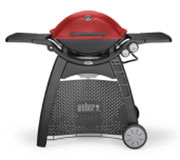
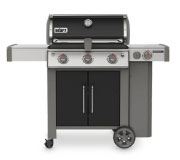
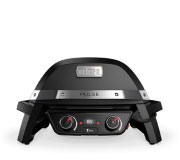
Prepare the barbecue for indirect cooking over medium heat (190°C-230°C).
In a bowl, add the cauliflower florets. Lightly coat with olive oil and season with Weber’s All Purpose Rub.
Roast the cauliflower over indirect medium heat, with the lid closed, for 30 to 40 minutes or until the cauliflower is tender and lightly golden.
While the cauliflower is roasting, make the harissa yoghurt. In a small bowl combine the garlic, yoghurt, 3 teaspoons of harissa paste, lemon juice and sea salt. Stir to combine. In a separate small bowl, combine the remaining 1 teaspoon of harissa paste and 3 teaspoons of olive oil. Pour the yoghurt into a small serving bowl, drizzle the harissa oil over the top and swirl with a spoon if desired. Garnish the cauliflower with chopped parsley and the harissa yoghurt dipping sauce.
Prepare the barbecue for indirect cooking over medium heat (190°C-230°C).
Cut a sheet of baking paper to the shape of the salmon/ocean trout with a small border of overhang (this will make it easier to manoeuvre the fish on and off the barbecue). Place the fish onto the sheet of the baking paper, skin side down. Lightly coat the fish with olive oil and season all over the flesh side with Weber’s Herb Seasoning. Lay slices of lemon over the fish (optional).
Once the barbecue has preheated, roast the salmon/ ocean trout over indirect medium heat, with the lid closed, for 25 to 30 minutes or until cooked to your liking.
Remove the side of salmon/ ocean trout from the barbecue and leave to rest for at least 5 minutes before serving.
Prepare the barbecue for indirect cooking over medium heat (190°C-230°C) with a rotisserie. Follow your rotisserie’s user guide for specific set up instructions.
Truss the chicken with cooking string, ready for the rotisserie rod.
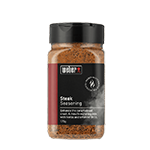
Lightly coat the chicken with olive oil and season all over with the Weber Barbecue Seasoning.
Slide one rotisserie fork onto the rotisserie rod, with the tines facing inwards. Slide the chicken onto the rotisserie rod, as close to the centre of the rod as possible and gently push the chicken onto the fork tines until they are deep inside. Add the other fork onto the rod, with the tines facing inward, push the fork firmly into the chicken. Centre the chicken on the rod and tighten the forks.
Once the barbecue has preheated, set the rotisserie rod in place. Turn on the rotisserie motor and ensure it is smoothly rotating. Roast the chicken over indirect medium heat, with the lid closed, until an instant-read thermometer inserted into the thickest part of the breast (not touching bone) registers 71°C, approximately 1 ½ hours.
Wearing heatproof gloves, carefully remove the spit from the barbecue. Loosen the forks and slide the chicken off the spit and onto a board. Leave the chicken to rest for 15 minutes before carving to allow the temperature to reach 74°C and for the juices to redistribute, resulting in a juicier chicken.
Carve and enjoy.
For best results, use a meat thermometer to know when your chicken is ready. Insert the probe deep into the breast, but not touching the cavity. You can remove the chicken from the barbecue once is reaches 71C and leave to rest for 10 to 15 minutes before carving, the temperature will continue to rise 3 to 6 degrees to the final safe cooking temperature of 74°C for poultry.
Prepare the barbecue for direct cooking over medium heat (180°C-230°C).
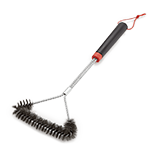
Once the barbecue has preheated, brush the cooking grills clean with a wire brush. Place a small Weber Casserole Dish or barbecue-safe saucepan onto the barbecue to preheat for 1 to 2 minutes. Add the cinnamon stick, star anise pods and cloves to the pan and toast over direct medium heat, with the lid closed for 3 to 4 minutes or until fragrant. Remove the pan from the barbecue.
Peel the rind off one orange and one lemon (trim away any white pith from the rind segments as it will make the wine bitter). Cut all the oranges and lemon in half. Grill the orange and lemon halves, cut side down for 2 minutes over direct medium heat. Flip the citrus over and cook for a further 2 minutes. Squeeze some of the juice out of the citrus into a bowl and place the citrus (cut side up) back onto the barbecue to grill for a further 2 minutes to release all the juice. Once nicely grilled, squeeze the remaining juice out of the citrus into the bowl.
For the orange garnish. Dip the slices of orange into sugar and grill over direct medium heat for 2 minutes, or until caramelised grill marks appear on one side. Set aside until required.
Adjust the barbecue to low heat. Add the squeezed citrus juice, reserved peels, caster sugar and toasted spices to the pan. Cook for 4 minutes, over direct low heat, or until the syrup is gently simmering.Adjust the barbecue to low heat. Add the squeezed citrus juice, reserved peels, caster sugar and toasted spices to the pan. Cook for 4 minutes, over direct low heat, or until the syrup is gently simmering.
Add the wine and brandy, gently warm over direct low heat for 4 minutes just until it starts to simmer (don’t boil). Turn the barbecue off. Serve into glasses with a slice of caramelised orange into each glass. Place the lid on the casserole dish, to keep the wine warm while you enjoy.
Use whole spices: Don’t be tempted to use ground spices, as it will create an undesired texture in the wine. Toasting the whole spices brings out extra flavour.
Prepare the barbecue for direct cooking over high heat (250°C-290°C). Preheat the barbecue with a large Weber casserole dish (without the lid).
In a small bowl, combine all the spice mix ingredients. Coat the pumpkin and eggplant with 1 tablespoon of olive oil and 2 teaspoons of the spice mix.
Brush the cooking grills clean with a wire brush. Add the remaining 2 tablespoons of olive oil and chopped onion to the pan and sauté over direct high heat, with the lid closed, for 4 minutes or until softened, stirring occasionally. While the onion is cooking, add the pumpkin and eggplant to the cook grill and grill over direct high heat for 3 minutes.
Rotate the pumpkin and eggplant after 3 minutes. Add the garlic, ginger and remaining spice mix to the casserole dish. Stir and continue to cook for a further 3 minutes. Remove the eggplant from the cooking grill. Rotate the pumpkin again and continue to cook the pumpkin for a further 3 minutes or until deeply coloured. The pumpkin does not need to be cooked through, just wonderfully caramelised on the outside.
Add the coconut milk, tin tomato and water to the casserole dish. Stir and then add in the pumpkin, eggplant and drained chickpeas. Cover with the casserole dish lid and simmer for 40 minutes, you may need to reduce the temperature of your barbecue to reach a gentle simmer. Cook until the pumpkin has softened, stirring as needed.
While the curry is simmering, grill a lemon, cut side down over direct heat for 2 minutes or until caramelised.
Once the curry has reduced and the pumpkin has cooked through, remove from the barbecue. Squeeze the caramelised lemon juice all over the curry and gently stir. Serve the curry with coriander and steamed rice.
Prepare the barbecue for direct cooking over medium heat (180°C-230°C).
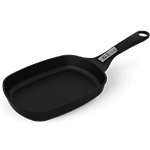
In a Weber Q® Ware Small Frying Pan add the butter and shallots. Lightly coat the steaks with olive oil and season with salt and pepper.
Brush the cooking grills clean with a wire brush. Add the frying pan to the barbecue over direct medium heat and cook for 3 minutes or until the shallots are starting to colour. Add the garlic to the pan and continue to cook for 2 minutes. Add the remaining sauce ingredients and bring to a gentle simmer for 4 minutes or until just thickened. Remove the pan from the barbecue, set aside until required. Increase the temperature of the barbecue to direct high heat.
Grill the steaks over direct high heat, with the lid closed, for 2 to 4 minutes per side, or until cooked to your liking. Once cooked, remove the steaks from the barbecue and leave to rest. Season the sauce with salt and pepper to taste.
Carve the T-Bone steaks, serve with the sauce and garnish with finely chopped chives.
Crème fraiche substitute: 100ml light cream + 100mL sour cream.
Prepare the barbecue for direct cooking over high heat (250°C-290°C).
Prepare your barbecue for direct cooking over high heat (290°C-315°C). If you are using a Weber Pulse™, preheat your barbecue with the lid closed and your control knob(s) on high for 15 to 20 minutes, or until the barbecue reaches 290°C.
Slice the bananas in half lengthways, leaving the bananas in the peel. Sprinkle the cut side of the bananas with 1 teaspoon of sugar.
Once the barbecue has preheated, brush the cooking grills clean with a wire brush. Grill the bananas, cut side down over direct high heat, with the lid closed, for 2 minutes or until the banana has deeply caramelised. Flip the bananas over and cook, skin side down for a further 2 minutes. Remove the banana from the cooking grill once caramelised on both sides. Set aside until ready to serve.
While the bananas are cooking, make the egg mixture; combine all the egg mixture ingredients together in a shallow dish and lightly whisk together. Dunk each slice of bread into the mix, one by one, lay the soaked the bread on to a tray, allowing the bread to absorb the excess egg mixture.
Leave the barbecue on high to burn off any sugary residue. Once carbonised, brush the cooking grills clean with a wire brush. Reduce the temperature of the barbecue to medium- low heat. Add the coconut flakes to a small disposable drip pan and place over direct medium-low heat. Cook for 2 to 4 minutes, shaking the pan occasionally, or until the coconut is golden and crunchy. Be sure to stay close to your barbecue as the coconut can easily burn.
Spray both sides of the egg-soaked bread with cooking oil spray while they are laid out on the tray. Place the slices onto the cooking grill and grill over direct medium-low heat for 2 to 3 minutes per side or until deep brown grill marks appear.
Scoop the banana out of the peel, serve on top of the French toast with the toasted coconut chips. Finish with maple syrup and extra thickened cream.
Don’t miss out! Be the first to know about the latest news and promotions.