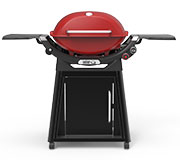
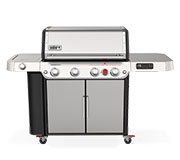
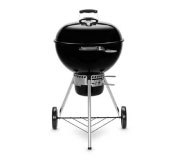
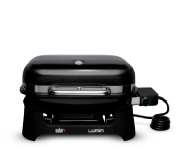
Prepare the grill for indirect cooking over medium heat (180° to 230°C).
Combine the glaze ingredients in a small saucepan. Place over medium heat on the stove top, and cook until thickened, 1 to 2 minutes, whisking until smooth. Keep the glaze warm or reheat when ready to serve.
Season both sides of the pineapple slices with the pepper. Cook over indirect medium heat, with the lid closed, for 3 to 4 minutes on each side.
Serve each pineapple slice with ice cream and glaze drizzled over the top.
In a jug, combine the warm milk, sugar and yeast. Stir gently and set aside in a warm place for 5 to 10 minutes or until the mixture is frothy.
Mix together the bread flour, mixed spice, cinnamon and the salt in a large bowl or bread maker. Create well in the centre, pour in the yeast mixture and eggs. Combine the mixture into a soft dough (mixture will be sticky, add a little more flour if it is too wet). Knead until the dough comes together.
Add the butter in three portions, kneading after each addition. Once the butter has incorporated, knead for 5 minutes. Transfer the dough to a greased bowl, cover in plastic wrap and let stand in a warm environment for 1 hour or until doubled in size.
Knock back the dough and incorporate the chocolate chips, folding and kneading the dough. Divide into 12 portions. Line a baking tray with baking paper and place the balls of dough onto the tray, evenly spacing with a 4cm gap. Loosely cover with greased plastic wrap.
Leave to stand in a warm environment for 30 minutes to 1 hour at room temperature, or until doubled in size.
Prepare your barbecue for indirect cooking over medium-low heat (170°C to 190°C). Using a pastry brush, gently brush the buns with the melted butter. To make the chocolate cross; combine all the chocolate flour paste ingredients in a small bowl. Pour into a piping bag or ziplock bag. Cut the corner off the bag and pipe a cross onto each bun.
Place the tray on and bake the buns over indirect medium-low heat for 20 to 25 minutes.
Once cooked, remove from the barbecue. Slide the buns onto a cooling rack and brush the buns with the melted honey. Leave the buns to rest for 10 minutes. Best enjoyed warm, can be served with butter.
For best results, use bread flour as it will provide a much lighter and fluffier texture. Alternatively, you can use plain flour for a more traditional hot cross bun texture.
Butterfly the turkey breast. Cover with plastic wrap and pound to a 1.5cm thickness. In a bowl combine the pork sausages, pistachios, dried cranberries, and finely chopped sage leaves.
Lay overlapping sheets of plastic wrap on a bench, to a size slightly bigger than the butterflied turkey breast. Lay the prosciutto onto the plastic wrap, in a vertical line towards the top edge of the plastic wrap, slightly overlapping. Place the butterflied turkey breast onto the prosciutto. Spread the sausage mixture over the turkey breast and tightly roll the breast upwards, starting from the bottom edge, into an even cylindrical shape, using the plastic wrap to help keep the roll tight. Tightly wrap the roulade using the plastic wrap and refrigerate for 1 hour.
Prepare your barbecue for indirect cooking over medium heat (190°C to 230°C). If you are using a Weber Q barbecue, set up your barbecue with a convection tray and trivet.
Remove the turkey roll from the refrigerator and discard the plastic wrap. Truss the turkey roulade with butcher’s twine.
Roast the roulade over indirect medium heat, with the lid closed, for 50 minutes and then place the 5 sage leaves on top of the turkey roulade. Continue to cook the turkey for an additional 10 to 20 minutes, or until the cooked through.
While the turkey is cooking, make the cranberry reduction. On a side burner or stove top, simmer the cranberries, port, and chicken stock for 10 minutes or until reduced, stirring as required. Add the butter and continue to cook for a further 2 minutes. Remove from the heat and season with salt and pepper.
Once the turkey has cooked, remove from the barbecue and allow to rest for 15 minutes before carving. Once rested, slice the turkey and serve with the cranberry reduction.
The final doneness temperature for turkey is 74°C. You can take the turkey off the barbecue once it has reached an internal temperature of 71°C, the temperature will continue to rise 3°C to 6°C while resting. Refrigerating the turkey roll will allow the flavours to enhance and the turkey roulade to firm up.
In a small bowl, whisk together all the sauce ingredients. Cover and refrigerate until 30 minutes before serving. (The sauce can be made up to 8 hours in advance).
In a separate small bowl, whisk together all the marinade ingredients. Place the lamb chops in a large glass baking dish, pour the marinade over them and turn the chops to coat evenly. Cover and refrigerate for at least 2 hours or up to 4 hours. Allow the chops to stand at room temperature for 15–30 minutes before barbecuing.
Prepare the barbecue for direct cooking over medium heat (180 to 230°C).
Brush the cooking grills clean. Remove the chops from the dish and discard the marinade. Grill over direct medium heat, with the lid closed, until cooked to your desired doneness (8–10 minutes for medium rare), turning once. Remove from the barbecue and leave to rest for 3–5 minutes.
Serve the chops warm, with the yoghurt sauce alongside.
Place all of the nam jim ingredients in a food processor, and process for 10 to 20 seconds.
Put the chicken wings in a bowl and pour half of the nam jim marinade over the chicken. Marinade the chicken while the barbecue is preheating. Reserve the remaining nam jim to serve as a sauce.
Set up your barbecue for indirect cooking. Please refer to your handbook for further instructions. Preheat your barbecue for high indirect cooking.
Once the barbecue is preheated, make adjustments to the burner control(s) for high indirect roasting. Place the chicken lollipops on the barbecue over indirect high heat, close the lid, and roast for 20 minutes.
Serve the chicken lollipops with the nam jim sauce.
On a side burner or stove top heat the butter, garlic, Worcestershire sauce, hot chilli sauce, lemon juice, and smoked paprika in a saucepan over high heat. Leave the mixture to simmer for 2 to 3 minutes.
Prepare the barbecue for indirect cooking over medium heat (180°C to 230°C). If using a Weber® Q® barbecue, set up your barbecue with a convection tray and a trivet.
Place a teaspoon of the butter mixture over each oyster and top with a sprinkle of the grated Parmesan cheese.
Carefully place the oysters on the barbecue and cook over indirect medium heat, with the lid closed, until the juices start to bubble, 5 to 10 minutes.
Remove the oysters from the barbecue and garnish with a sprinkle of the finely chopped chives.
In a jug combine the warm milk, sugar, and yeast. Stir gently and set aside in a warm place until the mixture is frothy, 5 to 10 minutes.
Sift the bread flour and the salt into a large bowl or bread maker. Create a well in the centre, pour in the yeast mixture and eggs. Use a flat-bladed knife to combine the mixture into a soft dough (mixture will be sticky). Knead for 5 minutes.
Add the butter in three portions and knead for 15 minutes. Transfer dough to a greased bowl, cover in plastic wrap, and let stand in a warm environment for 1 hour or until doubled in size.
Knock back the dough and divide into four portions; place onto four squares of baking paper. Roll the four portions into 25cm diameter circles. Spread the Nutella on three of the circles, leaving a 2cm border. Sprinkle the dark chocolate on the Nutella.
Start with the plain circle on the bottom, place onto a baking tray. Flip the other three circles, chocolate side down, on top of the plain circle, removing the baking paper as you go. Place a round 5cm scone cutter in the centre of the circle (do not press down). Make 16 evenly spaced cuts from the scone cutter to the outside of the dough. Remove the scone cutter. Hold two strips of the dough and rotate twice outward. Press the ends together. Continue with the remaining strips. Loosely cover with greased plastic wrap. If you wish to cook the following day, place the dough star into the refrigerator.
Leave to stand in a warm environment for 30 minutes to 1 hour at room temperature, or until doubled in size.
Set up and preheat your barbecue for baking (refer to your handbook for further information).
Whilst the barbecue is preheating, make the egg wash. Combine the egg yolk and 1 tablespoon water. Using a pastry brush, carefully brush onto the bread.
Once the barbecue has preheated, adjust the burner(s) to the baking setting. Bake the bread for 20 to 25 minutes. Once cooked, remove from the barbecue. Finish with a dusting of icing sugar.
Set up your kettle for indirect normal fire cooking method, using approximately 22 Weber Barbecue Briquettes in each charcoal basket. Light the fire-lighters and move the charcoal baskets to the center of the charcoal grate over the flames.
With a sharp knife, cut the rind around the sides of the pork, around the knuckle, and down the centre to free it on all sides, ensuring that you have cut right through the rind to the fat, but not into the flesh.
Approximately 25 to 30 minutes after lighting, all of the coals will be ashed over and ready for cooking. Separate the charcoal baskets using tongs. Place foil drip pans between the two fires (must be large enough to catch all of the drippings). Place the cooking grill on the barbecue with the grill handles directly over the fires.
Place the pork on to the cooking grill. If the edges of the pork are hanging over the direct zone (above the fire), shield the sides with aluminium foil. Close the lid, ensuring the air vents are open and positioned over the indirect zone. Cook for 2½ hours to blister the skin.
To make the glaze, combine the butter and shallots in a saucepan over high heat and cook until the shallots are cooked. Add the thyme, Riesling, red currant jelly, balsamic vinegar, and pepper. Continue to simmer for 10 to 15 minutes or until the glaze is thickened and caramelised, stirring often. Set aside to cool completely.
Remove the pork skin with tongs. Score the fat in a diamond pattern, being careful not to cut into the flesh, as the ham flesh will dry out.
Top up the charcoal baskets with additional barbecue briquettes. Add three wood chunks to the coals. Continue to cook the ham for a further 30 minutes to render the fat before applying the glaze.
After 30 minutes of the ham cooking without the skin, decorate with the whole cloves. Apply a generous amount of the glaze over the ham and continue cooking for a further 1 hour, glazing the ham every 20 minutes.
Once the ham has cooked and reached an internal temperature of 68°C, remove the ham from the barbecue. The internal temperature will continue to rise 3° to 6°C while it’s resting. Leave to rest for 15 minutes before carving.
Set up your barbecue for direct cooking. Please refer to your handbook for further instructions.
Place a large Weber Ware Casserole Dish (without lid) on the cooking grill and preheat your barbecue on high for 10 minutes. Once the barbecue has preheated, adjust the burner(s) to medium.
Add the olive oil, butter, and onion to the casserole dish, and cook until the onion is soft, 2 to 3 minutes, stirring as required. Add the raisins, pine nuts, and pistachios and cook until the nuts are toasted, a further 5 to 7 minutes.
Add the chicken stock and place the lid on the casserole dish (vent closed). Cook until the chicken stock comes to a boil, about 6 minutes.
Turn off the barbecue. Using the detachable handles or heatproof gloves, remove the casserole dish from the barbecue. Stir in the couscous, cover with the casserole lid, and leave for 10 minutes. Fluff with a silicon spoon. Set aside to cool.
Stir through the mint, coriander, and parsley. Top with the pomegranate seeds, if using.
To marinate the kangaroo fillets; In a small bowl combine the olive oil, lemon juice, garlic, thyme, season with salt and pepper. Add the kangaroo fillets and refrigerate for 2 hours or overnight.
To make the roast vegetable salad; prepare the barbecue for indirect cooking over medium heat (190°C to 230°C). If you are using a Weber Q barbecue, set up your barbecue with a convection tray and trivet. Place the sweet potato cubes into a bowl, drizzle with olive oil, season with salt and pepper. Thoroughly wash the beetroots, tightly wrap each beetroot in aluminium foil. Roast the sweet potato and wrapped beetroots over indirect medium heat for 30 to 40 minutes.
To make the salad dressing; In a small bowl, combine the olive oil, red wine vinegar, wholegrain mustard, caster sugar and season with salt and pepper to taste. Set aside until required.
Once the sweet potato and beetroots have cooked, remove from the barbecue. Allow the vegetables to cool enough to handle. Once the beetroots have cooled enough to handle, peel and slice into quarters. Set aside until required.
Prepare the barbecue for direct cooking over high heat (230°C to 290°C).
Brush the cooking grills clean. Grill the kangaroo fillets over direct high heat for 4 minutes on each side, or until seared and caramelised. If additional cooking time is required, move the kangaroo fillets to an indirect zone to finish cooking to your liking.
Once the kangaroo has cooked, leave to rest for 5 minutes before slicing.
To finish the salad; toss together the sweet potato, beetroot and rocket. Top with crumbled feta and dress with the wholegrain mustard dressing. Finish with thin slices of kangaroo fillet.
Rare: 49°C
Medium Rare: 54°C
Medium: 60°C
Medium Well: 66°C
Well Done: 68°C
Don’t miss out! Be the first to know about the latest news and promotions.